Most sellers in Pleasant Hill assume a septic inspection is baked into Oregon's real estate law, the same way a home inspection contingency is baked into most purchase agreements. It isn't. The Oregon Department of Environmental Quality states plainly that septic system evaluations are voluntary statewide, whether the home is changing hands or not. No county health department is standing at the closing table demanding paperwork.
And yet septic problems still stall Pleasant Hill closings every year, not because the state requires anything, but because the buyer's lender does. The variable that decides whether your septic system gets inspected before you can close isn't the system's age, the property's history, or Oregon law. It's which loan program the winning buyer happens to use. That single fact changes how a seller should prepare a listing in a place like Pleasant Hill, where acreage and private wastewater systems are common rather than the exception.
What Oregon Actually Requires, and What It Doesn't
Oregon's DEQ is direct about this: septic system evaluations are voluntary even during a sale. The state recommends an evaluation, but recommending is not requiring. If a seller and buyer both agree to skip it, nothing in Oregon law stops them.
When an evaluation does happen, it has to follow a specific format. DEQ requires the person doing it to hold one of a short list of qualifications, an installer certification, a maintenance provider certification, a NAWT wastewater technician license, an Oregon Registered Wastewater Specialist or Environmental Health Specialist credential, or a professional engineering license. The findings go on an approved Existing System Evaluation Report form, not a generic inspection write-up. DEQ maintains a SepticSmart inspector list to help people find someone qualified, and the program is refreshing that list through a new sign-up window running from June 1 to December 15, 2026.
So the state's position is consistent: get it evaluated if you want to, use a qualified person if you do, but nobody is forcing the issue. That's where most sellers stop reading, and where the real risk starts.
The Number That Actually Controls Your Closing Date
Ask four different lenders what they require on a septic property and you'll get four different answers, and the differences aren't cosmetic. They're the difference between a clean 30-day close and a closing that slides three weeks while a well gets tested and a tank gets pumped.
| Loan type | Septic evaluation required | Water quality test required |
|---|---|---|
| Conventional | Generally only if an appraiser or inspector flags a concern | Generally only if flagged |
| FHA | Mortgage Research says the system must be certified functional and approved by the local health authority, with well flow at least 3 gallons per minute. | LoanPronto says the test is valid for 180 days. |
| VA | Required only if soil conditions or the appraiser raise a concern | Required for private wells, valid 90 days |
| USDA Guaranteed | Lender is required to obtain a septic evaluation on nearly all properties with private systems | OfficeConsumer says well and septic inspections are valid for 120 days from loan closing. |
USDA's own program handbook spells this out directly: the lender is required to obtain a septic evaluation, performed by a qualified appraiser, a government health authority, a licensed septic professional, or a qualified home inspector. Conventional loans sit at the opposite end, treating septic and well systems as a non-issue unless someone flags a problem.
This means the exact same Pleasant Hill property, same tank, same age, same drainfield, can close in three weeks for a cash buyer or a conventional borrower, and take a month longer for a USDA borrower whose lender won't clear to close without a documented evaluation and a water test. Sellers don't choose which buyer's offer wins on financing terms alone. But once an offer is accepted, the loan program embedded in that offer starts dictating the calendar, not the property.
Why This Cuts Deeper in Pleasant Hill Than In Town
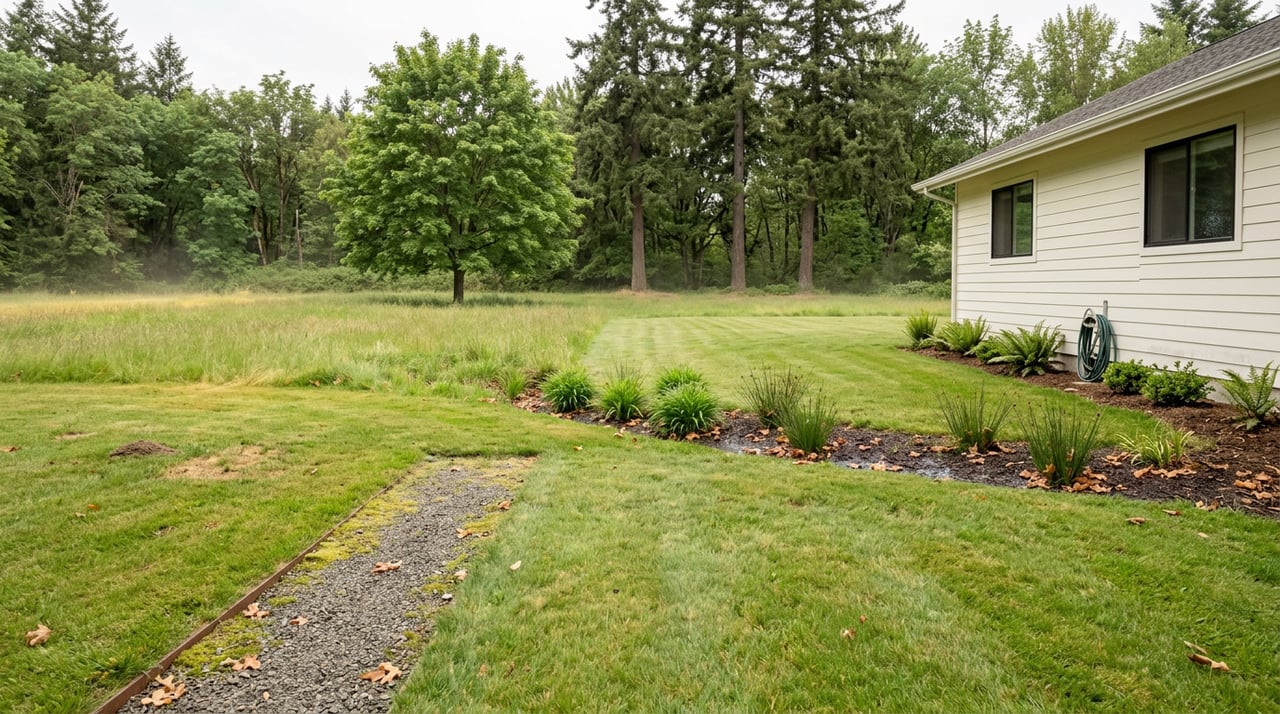
In Eugene or Springfield proper, most homes sit on municipal sewer and water, so this entire question is moot. Pleasant Hill is a different animal. Its identity is rural-suburban acreage close to Eugene, which means private wells and septic systems aren't an edge case, they're standard inventory.
That inventory profile also tends to draw the exact buyer pool most likely to use USDA financing. USDA Loans says USDA Rural Development loans are built for areas outside larger incorporated cities with populations under roughly 35,000. A buyer drawn to Pleasant Hill specifically for the acreage, the privacy, and the distance from town is disproportionately likely to be shopping with a USDA-eligible loan in hand, and that's precisely the loan type with the strictest septic and well requirements on the list above.
A seller who assumes "Oregon doesn't require an inspection, so I don't need to think about it" is reading the wrong rulebook. The rulebook that matters is whichever lender's underwriting file the winning offer belongs to, and in Pleasant Hill's buyer pool, USDA shows up often enough that ignoring it is a real risk to your timeline.
What Lane County's Own Process Looks Like
If an evaluation or a new system becomes necessary, the work runs through Lane County's On-Site Wastewater program, based at 3050 North Delta Highway in Eugene, reachable at (541) 682-4651. Sanitation staff work by appointment, Monday through Friday, 9 a.m. to 3 p.m., not walk-in hours, which matters if you're trying to move fast against a closing date.
For a new system or a site evaluation, the county's test pit process requires at least two test pits, three preferred, spaced 50 to 100 feet apart, each two feet wide, four feet long, and five feet deep, with a stepped or ramped end for safe access. The plot plan submitted alongside them has to show every well on the property and the neighbors' wells too. This isn't a same-day process, and if your buyer's financing timeline assumes it is, that assumption needs correcting early.
One more date worth knowing: Lane County's Board of Commissioners passed an order in July 2026 amending the Land Management Division's fee schedule for on-site sanitation and code enforcement, with the new fees taking effect September 1, 2026. If you're pricing out a pre-list evaluation or a permit this fall, check the current fee schedule rather than working from an older number.
DEQ's own framing is worth repeating here, because it's the honest middle ground between "not required" and "doesn't matter":
The Oregon Department of Environmental Quality recommends having your septic system evaluated by a professional if you're buying or selling a home.
Voluntary and irrelevant are not the same thing.
A Pre-List Sequence That Removes the Guesswork
For sellers with a septic system, the fix isn't waiting to see what financing shows up. It's front-loading the documentation so any buyer's lender, USDA included, has less to ask for later.
- Find out when the tank was last pumped and ask the pumper to check the inlet and outlet baffles for cracks while it's empty. DEQ recommends inspecting for solids buildup roughly every five to seven years, and pumping once accumulation passes 40 percent.
- Pull any permit history for the system through Lane County's property records. A system installed without a permit is worth knowing about before a buyer's inspector finds it.
- If your property is likely to draw USDA-financed offers, get ahead of it with a voluntary Existing System Evaluation Report from a qualified provider on the SepticSmart list. It costs money you don't have to spend, but it removes a known point of friction before it becomes a mid-transaction delay.
- Keep any well flow and water quality documentation current if the property draws on a private well, since FHA, VA, and USDA all lean on it differently.
None of this is required by the state. All of it shortens the list of things a lender can hold your closing hostage to.
What Buyers Should Ask Before Writing an Offer
If you're the one shopping Pleasant Hill's acreage inventory, ask these questions before you get emotionally attached to a listing:
- When was the tank last pumped, and is there a written record?
- Was the system installed or altered with a permit on file with Lane County?
- What's the well's tested flow rate, and how old is the most recent water quality test?
- If you're using USDA or FHA financing, does the seller understand that your lender will require documentation they may not have gathered yet?
Asking these questions during your offer, not after your loan is already in underwriting, gives everyone room to solve small problems before they become closing delays.
The system underground doesn't change based on who's buying the house. What changes is who's required to look at it, and how fast. In Pleasant Hill, that's the fact worth building your timeline around, whether you're the one selling or the one about to sign a loan application.
If you're weighing a septic or well property in Pleasant Hill, whether you're preparing to list or narrowing down your financing options, Angela Burrell can help you map the paperwork to your actual buyer pool before it becomes a surprise. Reach out for a free consult, tell us what's next, and we'll build a clear plan to help you buy or sell with confidence.
This article is general information, not legal, tax or financial advice. Consult a qualified professional about your situation.