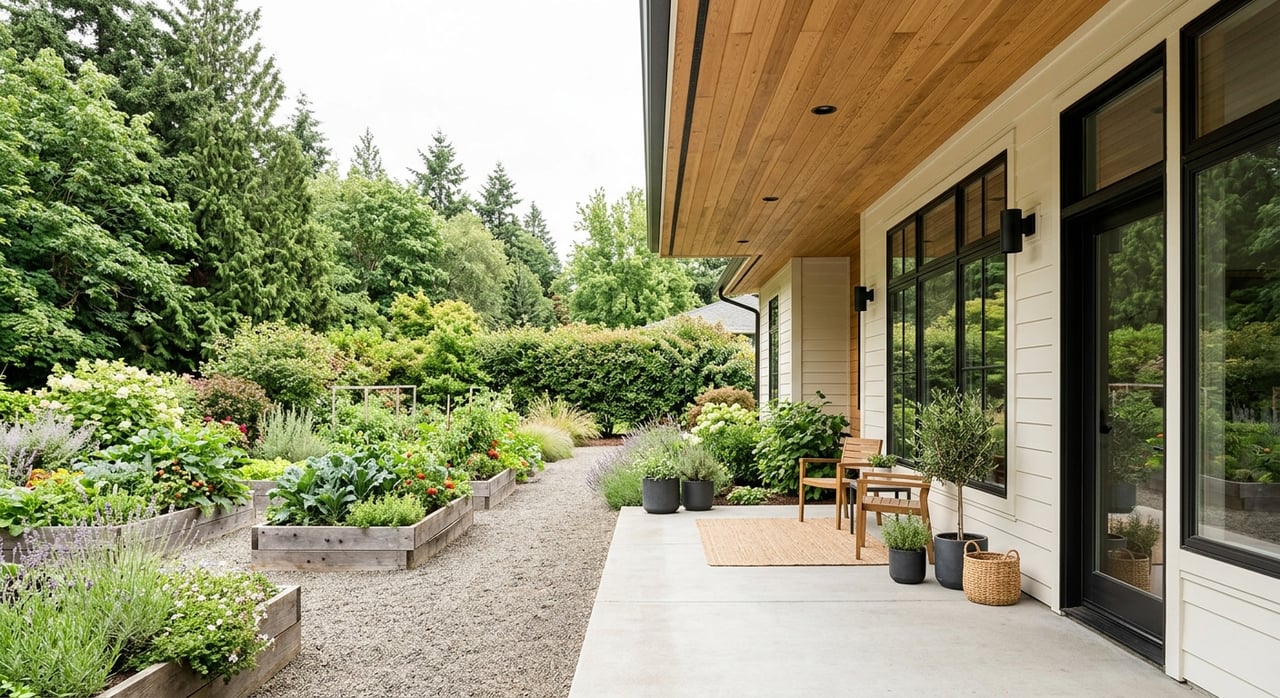
Wondering whether you should stay close to town or stretch out onto a few acres near Creswell? It is a common decision for buyers in this part of Lane County, and the right answer depends on how you want to live day to day. If you are weighing convenience against space, this guide will help you compare the tradeoffs with more confidence. Let’s dive in.
Why this choice matters in Creswell
Creswell is a compact city with an estimated 5,566 residents in 2025, and it covers just 1.71 square miles. That smaller footprint shapes the feel of in-town living, with a housing market that is more concentrated than many buyers expect.
The biggest practical difference often starts at the city limit. Homes inside Creswell city limits and the urban growth boundary are part of the city’s planned growth area, while properties outside that boundary are generally in unincorporated Lane County, where land use follows different rules and development limits.
What in-town Creswell living looks like
In-town Creswell tends to appeal to buyers who want a simpler ownership experience. The housing stock is mostly single-family detached, and the city’s housing analysis found that Creswell has a larger share of single-family detached homes than Lane County and Oregon overall.
That same analysis found that 98% of permits issued from 2000 through March 2018 were for single-family dwelling units. In practical terms, that means many buyers looking in town will be comparing traditional detached homes on city-style lots, with some manufactured-home inventory also present within the urban growth boundary.
In-town convenience and predictability
One of the biggest benefits of living in town is centralized utilities. The City of Creswell provides water service within city limits and sewer service to residents west of I-5, which can make monthly ownership costs feel more predictable.
As of rates effective July 1, 2026, the city lists residential base charges of $39.19 for water, $65.90 for sewer, $20.95 for a public safety fee, and $4.00 for the transportation utility fee. While every household’s total bill will vary, known city utility structures can make budgeting easier.
Commute and access benefits
If getting around easily matters to you, in-town living may have an edge. Creswell is about 10 miles south of Eugene-Springfield along Highway 99 and Interstate 5, and the city’s mean travel time to work is 22.7 minutes.
There is also a community transit link through LTD Route 98, which connects Creswell with Eugene Station and Lane Community College through the south Lane corridor. For some buyers, that extra transportation option adds peace of mind.
What nearby acreage living looks like
Nearby acreage living usually means properties outside Creswell’s urban growth boundary in unincorporated Lane County. These homes often offer more room to spread out, more outdoor utility, and more privacy than a typical in-town lot.
That extra space can support a different kind of lifestyle. You may have room for gardening, hobbies, storage, pets, or outbuildings, but you will also likely take on more day-to-day property oversight.
Rural lot sizes can be much larger
Lane County Rural Residential zoning is one of the clearest differences between acreage living and city living. Depending on the zone, minimum parcel sizes can be 2 acres in RR-1 and RR-2, 5 acres in RR-5, and 10 acres in RR-10.
That does not mean every property will feel the same, but it does show why rural homes often deliver a very different experience than in-town properties. A larger parcel can create flexibility, but it also comes with more land to maintain and more details to confirm before you buy.
Future improvements need zoning checks
Acreage buyers sometimes assume more land automatically means more building freedom. In reality, zoning still matters.
Lane County says accessory dwelling units may be allowed on Rural Residential lots of at least 2 acres if conditions are met. The county also notes wildfire-hazard mitigation requirements for rural ADUs, so if you are thinking about a guest space, shop, or future project, it is smart to verify what the parcel actually allows before making plans.
Utilities are a major dividing line
For many buyers, the biggest difference between in-town homes and acreage properties comes down to utilities. This is where the ownership experience can shift from straightforward to more hands-on.
In-town utilities are more centralized
In town, water and sewer access can simplify your to-do list. You are generally working within a city utility structure instead of managing major systems yourself.
That does not make in-town ownership maintenance-free, but it often reduces the number of property systems you need to actively monitor. For buyers who want fewer moving parts, that can be a meaningful advantage.
Acreage often means well and septic
Many rural properties rely on private wells and septic systems rather than city services. Oregon Health Authority says private wells are not maintained or regulated by the state or county government, which means the owner is responsible for routine testing, maintenance, and treatment.
Lane County regulates on-site wastewater systems for properties not served by community sewer. Before closing on acreage, buyers should also review property records and permit history to better understand the home’s sanitation, building, and land-use background.
Maintenance and risk feel different
A larger property can be rewarding, but it usually asks more of you over time. That includes not just mowing or landscaping, but also long-term attention to infrastructure, drainage, access, and seasonal upkeep.
For some buyers, that feels like freedom. For others, it feels like one more part-time job.
Wildfire preparedness matters more in many rural settings
Wildfire questions tend to come up more often with rural and acreage properties than with compact in-town lots. Oregon’s Building Codes Division notes that home-hardening steps can include ignition-resistant siding and roofing, ember-resistant vents, and other features that can reduce wildfire damage.
Burn restrictions can also vary by local fire district, so buyers looking at rural property should ask about local rules, defensible space, and whether the parcel is considered wildfire-prone. Not every acreage home carries the same level of concern, but it is an important part of due diligence.
Budgeting for each lifestyle
Price is only part of the story. The better question is what your monthly and long-term ownership pattern may look like.
Creswell’s median owner-occupied home value is $435,500, and median monthly owner costs are $2,021 with a mortgage. Those figures give useful local context, but your actual costs will depend on property type, utility setup, maintenance needs, and any improvements you plan to make.
In-town costs may feel easier to forecast
City living often brings more predictable recurring charges. When utilities are centralized and lot sizes are smaller, it can be easier to estimate regular monthly expenses and routine upkeep.
That predictability matters if you want a home that supports a busy schedule or a tighter planning style. It can also be helpful if you are moving from another city-based setting and want a familiar ownership rhythm.
Acreage costs can be less predictable
Acreage properties may reduce some city utility costs, but they can introduce other expenses over time. Well testing, septic maintenance, driveway upkeep, vegetation management, and repairs to rural improvements can all affect your budget.
That does not mean acreage is the more expensive option in every case. It means the cost picture is usually more customized, and you should look beyond the mortgage payment when comparing homes.
Which option fits your life best?
The best choice often comes down to how you want your home to function in everyday life. Both options can be a great fit, but they solve different problems.
In-town homes may fit you if you want:
- A shorter or simpler commute
- Access to centralized utilities
- Less property-management complexity
- A more predictable monthly ownership structure
- A home closer to Creswell’s compact city setting
Nearby acreage may fit you if you want:
- More room for outdoor use
- Greater privacy and separation from neighbors
- Space for hobbies, storage, or future improvements
- A property with rural character
- Comfort managing wells, septic, land upkeep, and fire-preparedness tasks
How to compare properties wisely
If you are deciding between an in-town home and a rural property near Creswell, it helps to evaluate each one through the same lens. That keeps emotion from crowding out important details.
Use a simple checklist as you tour and compare options.
Ask these questions before you decide
- Is the property inside Creswell city limits and the urban growth boundary, or in unincorporated Lane County?
- What utilities serve the property?
- If it is rural, what do the well, septic, and permit records show?
- What zoning applies, and what does it allow?
- How much land maintenance will you realistically want to handle?
- How important are commute time and transit access to your daily routine?
- Are you buying for convenience, flexibility, privacy, or a mix of all three?
A clear side-by-side comparison can make the right answer stand out faster. This is especially true when two homes look equally appealing at first glance but offer very different ownership experiences.
Choosing between in-town Creswell and nearby acreage is not just about square footage or lot size. It is about the pace, responsibility, and flexibility you want in your next chapter. If you want help sorting through the tradeoffs and building a plan that feels clear and stress-free, connect with Angela Burrell.
FAQs
What is the main difference between in-town Creswell homes and nearby acreage properties?
- In-town homes are usually inside Creswell city limits and the urban growth boundary, while nearby acreage properties are often outside the boundary in unincorporated Lane County with different zoning, utilities, and maintenance expectations.
What utilities should buyers expect in Creswell in-town homes?
- In-town buyers may benefit from city water service within city limits and sewer service for residents west of I-5, which can make monthly ownership costs more predictable.
What utilities should buyers expect with acreage near Creswell?
- Acreage properties often rely on private wells and septic systems, which means the owner is typically responsible for testing, maintenance, and treatment.
How large are Rural Residential lots near Creswell?
- Lane County Rural Residential zoning can require minimum parcel sizes of 2 acres, 5 acres, or 10 acres depending on the specific zone.
Can buyers add an ADU on acreage near Creswell?
- Possibly, but it depends on the property’s zoning and whether county conditions are met, including wildfire-hazard mitigation requirements for rural ADUs.
Is commuting from Creswell to Eugene practical for many buyers?
- For many people, yes. Creswell is about 10 miles south of Eugene-Springfield, and typical drive time to Eugene is estimated at about 16 minutes under normal conditions.